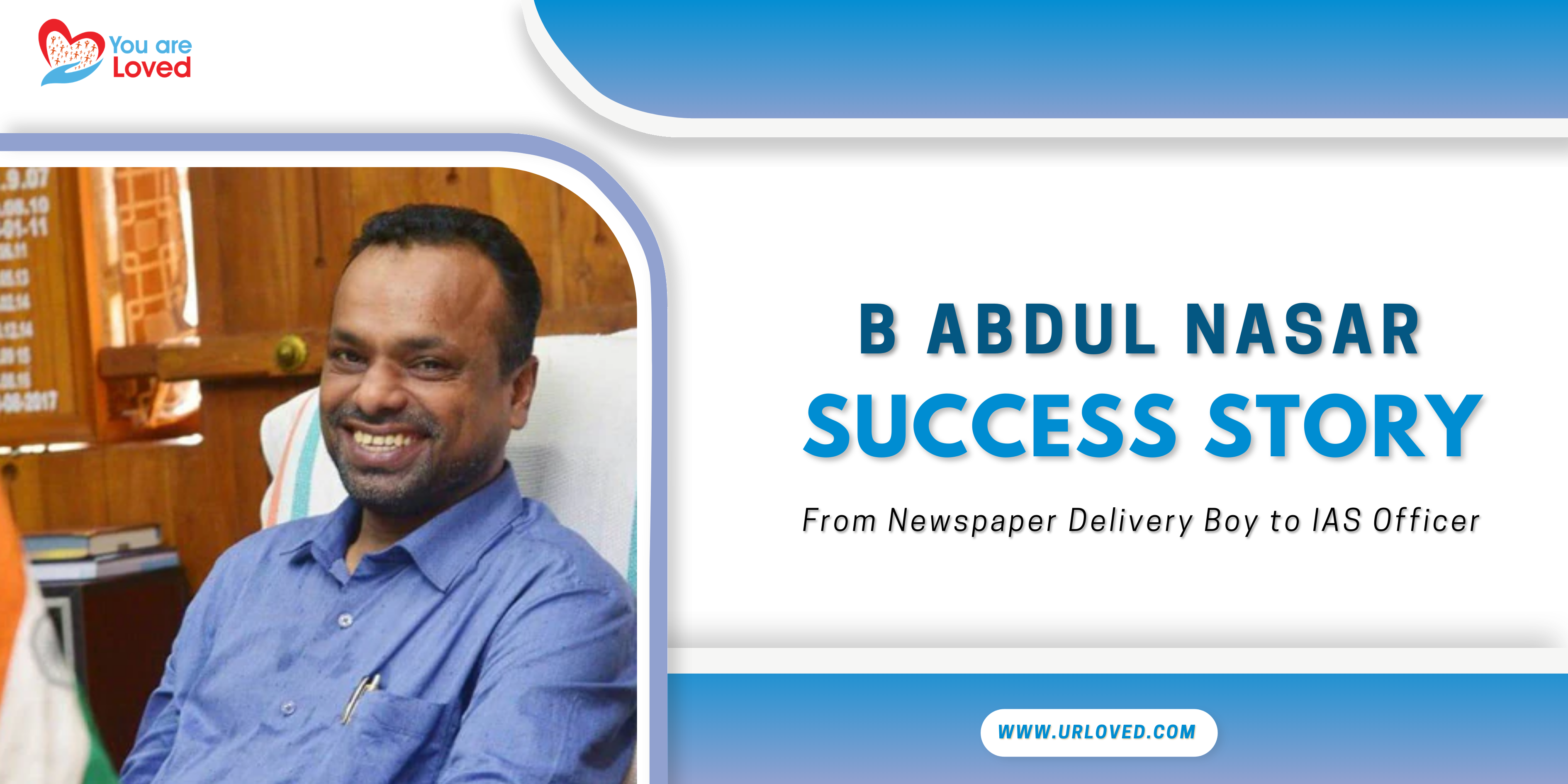
B Abdul Nasar Success Story: From Newspaper Delivery Boy to IAS Officer
The UPSC Civil Services Examination is widely considered one of the toughest competitive exams in India. Every year, lakhs of candidates appear for the exam with the dream of becoming IAS, IPS, or other civil servants. The journey demands years of preparation, discipline, and mental strength.
Many aspirants spend large amounts of money on coaching institutes hoping to improve their chances. But for students from financially struggling families, access to expensive coaching is often impossible.
This is why the success story of IAS officer B Abdul Nasar stands out. His journey from extreme poverty to one of India’s most respected administrative services proves that determination and persistence can overcome even the toughest circumstances.
Early Life Filled With Hardships
B Abdul Nasar was born in Thalassery, a town in Kerala’s Kannur district. His childhood was far from easy.
When Nasar was just five years old, he lost his father. The sudden loss left the family in a difficult financial situation. His mother had to work as a domestic helper to support the family.
Because of the financial struggles, Nasar and his siblings were placed in an orphanage, where he spent 13 years of his childhood.
Despite these challenges, he continued his education with determination.
Working at a Young Age
Life forced Nasar to grow up early.
At the age of 10, he started working to support his family. He worked as a cleaner and supplier in a local hotel, earning small amounts of money while continuing his studies.
As he grew older, he took on several jobs to manage expenses and support his family. Some of the jobs he did included:
- Delivering newspapers
- Taking tuition classes for students
- Working as a phone operator
These small jobs helped him continue his education and move forward in life.
Education and First Steps in Government Service
Despite financial hardships, Nasar remained focused on his studies. He completed his graduation from Government College in Thalassery.
Later, he pursued postgraduate studies, which opened the door to his first government job.
In 1994, B Abdul Nasar joined the Kerala Health Department as a government employee. This was the beginning of his journey in public service.
He worked sincerely and consistently, slowly building his career through dedication and discipline.
Rising Through the State Civil Services
Nasar’s commitment to his work did not go unnoticed.
Over the years, he continued to earn promotions within the government system. His ability to handle responsibilities and his dedication to public service helped him rise steadily through the ranks.
By 2006, he was promoted to the position of Deputy Collector in the Kerala State Civil Service.
This achievement itself was remarkable for someone who started life with so many struggles.
Recognition for Outstanding Work
In 2015, Nasar’s work received major recognition when he was named Kerala’s Best Deputy Collector.
This recognition highlighted his dedication, leadership, and commitment to serving people.
The award also played an important role in the next milestone of his career.
Achieving the Dream of Becoming an IAS Officer
In 2017, B Abdul Nasar was promoted to the Indian Administrative Service (IAS).
For someone who once delivered newspapers to survive, reaching the IAS was an extraordinary achievement.
After becoming an IAS officer, he continued to serve the public in important administrative roles. He later worked as the Housing Commissioner for the Government of Kerala.
In 2019, he was appointed as the District Collector of Kollam, one of the most respected administrative positions in the district.
Why B Abdul Nasar’s Story Inspires UPSC Aspirants
The journey of IAS officer B Abdul Nasar carries powerful lessons for every UPSC aspirant.
First, it proves that financial struggles do not have to define someone’s future. Even without access to expensive coaching or resources, determination and hard work can lead to success.
Second, his story shows that setbacks and slow progress are part of the journey. Success does not always happen quickly, but persistence eventually brings results.
Most importantly, his life reminds aspirants that discipline, resilience, and patience are more important than privilege.