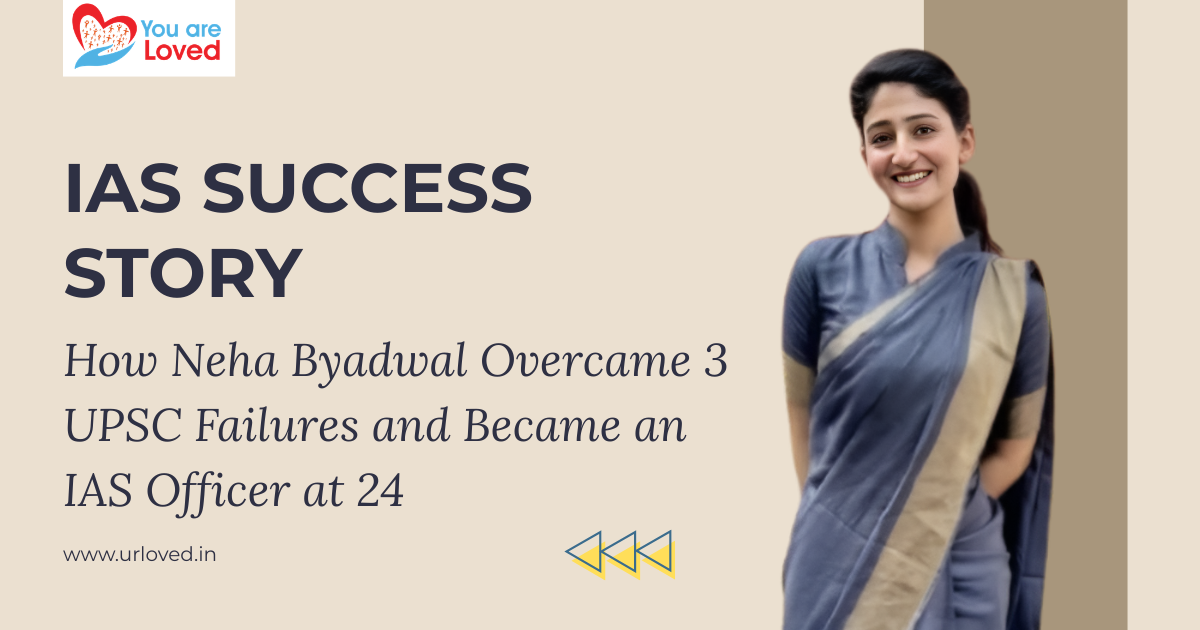
IAS Success Story: How Neha Byadwal Overcame 3 UPSC Failures and Became an IAS Officer at 24
The UPSC Civil Services Examination is one of the toughest exams in India. Every year, lakhs of candidates attempt it, but only a small percentage succeed. Most journeys are filled with setbacks, confusion, and repeated failures.
One such inspiring journey is of Neha Byadwal, who failed three times, struggled with language barriers, and still went on to become an IAS officer at a young age. Her story reflects how consistency and discipline can completely change outcomes, even when the beginning is difficult.
Early Life and Struggles
Neha was born in Rajasthan and raised in Raipur, Chhattisgarh. Her early schooling years were filled with challenges. She spoke Rajasthani at home, which made both Hindi and English difficult during her early education. These language barriers affected her academic performance in the beginning and even led to her failing Class 5.
This was a major setback at a young age, but it also became the starting point of her transformation. Instead of giving up, she decided to work harder on her basics and slowly improve her understanding of subjects and languages.
Academic Improvement and Turning Point
After her early struggles, Neha focused seriously on her studies from Classes 6 to 10. She worked consistently every day to strengthen her foundation. Over time, her academic performance improved significantly. She went on to perform well in college and even topped her course.
She also cleared the SSC examination, which gave her confidence that competitive exams were within her reach. Despite getting a stable job opportunity, she chose not to settle because her long-term goal was clear: she wanted to become an IAS officer like her father, who worked as a senior Income Tax Officer.
UPSC Journey and Initial Failures
Neha’s UPSC journey was not smooth. She faced multiple setbacks before achieving success. She failed the preliminary examination twice. In her third attempt, she managed to reach the mains stage but could not clear the final stage.
These repeated failures were emotionally challenging, but instead of quitting, she used them as learning experiences. Each attempt helped her understand her weaknesses and improve her preparation strategy.
The Breakthrough Decision
After her third unsuccessful attempt, Neha made a major decision that changed her preparation completely. She eliminated distractions from her life. She gave up her mobile phone and stayed away from social media entirely for a long period.
She built a strict study routine and focused deeply on self-study. Her daily preparation extended up to 17 to 18 hours, but more importantly, it was structured and consistent. This discipline became the turning point in her UPSC journey.
Final Success in UPSC
In her fourth attempt in 2023, Neha finally achieved success. She secured an All India Rank of 569 with a total score of around 960 marks. With this result, she became an IAS officer at the age of 25 and was later posted in Gujarat.
This success was not sudden. It was the result of years of continuous effort, repeated failures, and disciplined preparation.
Role of Family Support
Neha’s success was also supported by her family. Her father played an important role by helping her with subjects like mathematics and history after his work hours. Her brother and aunt also supported her during interview preparation by conducting mock sessions and helping her build confidence.
This strong support system helped her stay motivated during difficult phases of her preparation.
Key Lessons from Her Journey
Neha’s story highlights several important lessons for UPSC aspirants. Consistency matters more than motivation. Failures are part of the process and should be used for improvement. Removing distractions can significantly improve focus and productivity. Language or background limitations do not decide success if effort is consistent. Strong discipline and a clear goal can help overcome repeated setbacks.
Conclusion
The journey of Neha Byadwal shows that UPSC success is not defined by where you start but by how long you stay consistent. Her transformation from a student struggling with language and early failures to an IAS officer is a powerful example of resilience.
Her story proves that success is not about avoiding failure but about continuing despite it.