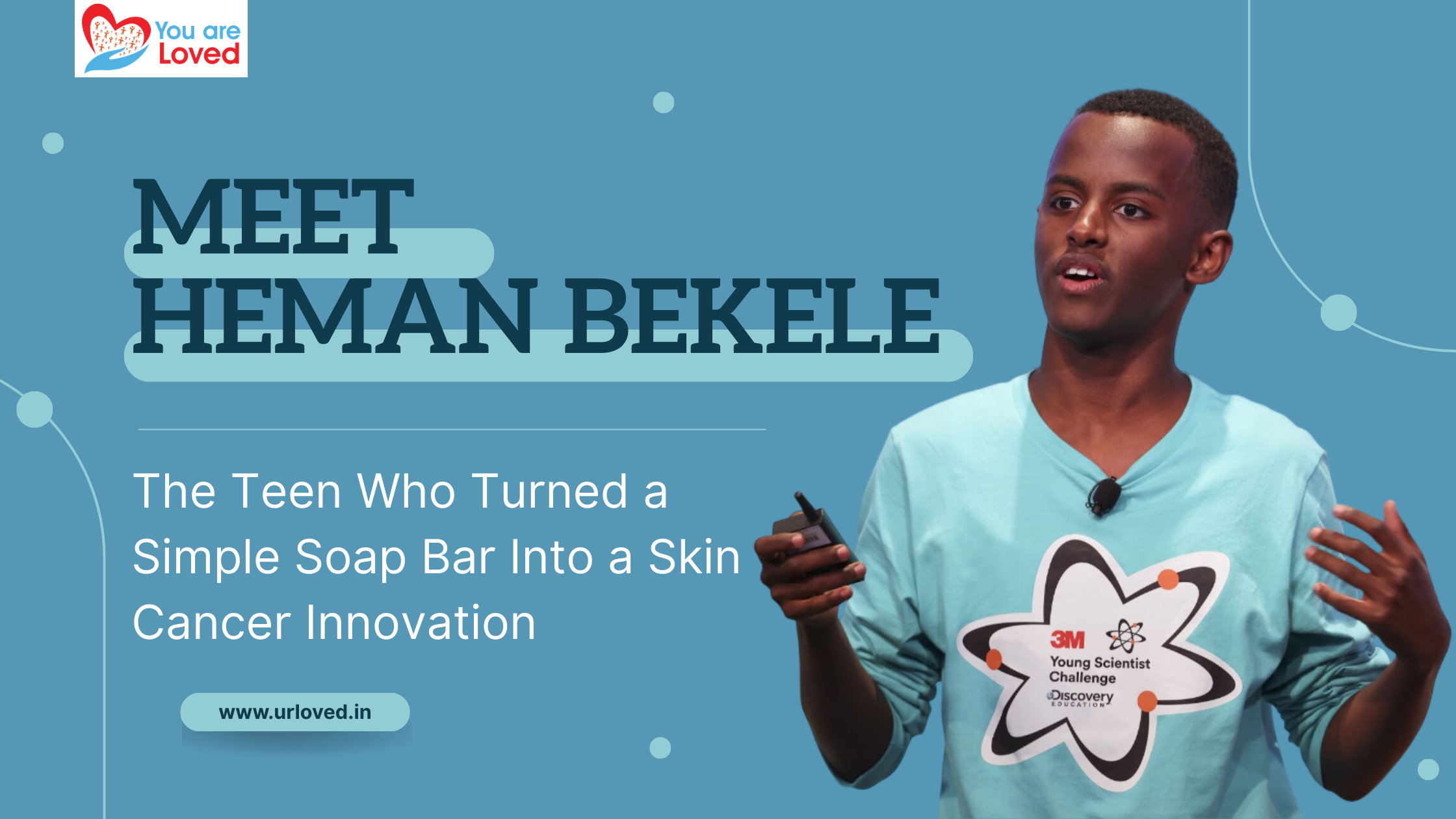
Meet Heman Bekele: The Teen Who Turned a Simple Soap Bar Into a Skin Cancer Innovation
At just 14 years old, Heman Bekele did something most adults only dream about. He didn’t just win a science competition. He created a low-cost solution that could one day help people fight skin cancer.
In 2023, Heman was named America’s Top Young Scientist after winning the prestigious 3M Young Scientist Challenge. He competed against nine finalists from across the United States and walked away with the $25,000 grand prize.
But the real story isn’t the prize money. It’s the problem he chose to solve.
The Problem That Sparked an Idea
Skin cancer is the most common cancer in the United States. According to the American Cancer Society, millions of cases are diagnosed every year. Treatment costs are staggering. In the U.S. alone, annual skin cancer treatment costs reach about $8.1 billion.
For many people in developing countries, the situation is worse. A single surgery can cost around $40,000. For families already struggling financially, that’s not just expensive. It’s impossible.
Heman saw that gap. And instead of scrolling past the issue, he decided to act.
The Birth of a Skin Cancer Treating Soap
While studying skin cancer, Heman learned about dendritic cells. These cells play a key role in helping the immune system recognize and fight cancer.
That insight led to his idea:
What if a simple bar of soap could help reactivate those cells?
He developed a medicated soap using three ingredients:
- Salicylic acid
- Glycolic acid
- Tretinoin
These ingredients are known for breaking down outer skin layers and helping active compounds reach deeper levels of the skin.
His concept, called Skin Cancer Treating Soap (SCTS), is designed to be used with a prescription every few days. Even more impressive? Each bar would cost around $0.50 to produce.
Affordable. Accessible. Practical.
That combination is rare in healthcare innovation.
Recognition on a National Stage
Heman, a ninth grader at W.T. Woodson High School in Virginia, presented his invention at the 2023 3M Young Scientist Challenge. With mentorship from a 3M engineer, he refined his idea and demonstrated both scientific understanding and social impact.
Judges were impressed not only by the science, but by his purpose.
His innovation later earned him another major honor. He was named TIME’s 2024 Kid of the Year by TIME, a recognition given to young individuals making meaningful change in the world.
It wasn’t just his intelligence that stood out. It was his compassion.
More Than a Scientist
Heman isn’t just focused on medicine. He’s a self-taught programmer who works with languages like Python, JavaScript, Lua, and C. He has a deep interest in STEM, research, and community impact.
He plans to use his prize money to:
- Patent his invention
- Support his future college education
- Continue refining the soap over the next five years
- Eventually build a nonprofit to distribute the product in underserved communities
He also hopes to become an electrical engineer one day.
That kind of clarity at 14 is rare.
Why Heman Bekele’s Success Story Matters
There are thousands of science competitions every year. Many winners build impressive prototypes.
But what makes this success story different is the heart behind it.
Heman didn’t invent something flashy for attention. He chose one of the most common and costly cancers in the world and asked a simple question:
“How can I make treatment more affordable?”
That mindset is what education should create. Not just grades. Not just trophies. But problem-solvers.
Lessons from Heman’s Journey
If you look closely, his story teaches a few powerful lessons:
1. Age is not a limitation.
Innovation doesn’t wait for adulthood.
2. Education works best when applied to real problems.
He used classroom knowledge and turned it into impact.
3. Accessibility matters in healthcare.
A $0.50 solution could change lives in low-income communities.
4. Mentorship accelerates growth.
Programs like the 3M Young Scientist Challenge give students the platform and guidance to think bigger.
The Future Ahead
Heman has said that his biggest motivation is knowing that one day his soap could directly help someone survive skin cancer.
That’s not ambition for fame. That’s ambition for impact.
He is still in high school. His research is still evolving. Clinical testing and regulatory approvals would be necessary before large-scale use. But the foundation has been built.
And sometimes, that first step is the hardest.
Final Thoughts
As someone who has written about education and innovation for over a decade, I’ve seen many bright students. But every now and then, a story stands out.
Heman Bekele’s journey isn’t just about winning a science challenge. It’s about seeing a global health issue and deciding not to ignore it.
A bar of soap may seem simple.
But in the right hands, it can become a symbol of hope.
And that’s what makes this a true success story in education.